Showing posts with label MLB. Show all posts

Thursday, August 10, 2023

The Bronx Bummers

Bill Parcells once famously said that you are what your record says you are. So while the Yankees talk constantly about their "championship caliber roster", their record very much says otherwise. Following another humiliating defeat at the hands of the Chicago White Sox, the Yankees sit in last place in the A.L. East and 5 games out of the final Wildcard slot.


Their record sits at 59-56, on a pace for a lowly 83 wins. Should that happen, it would be New York's lowest full-season win total since 1992. Optimistic fans would say that this team can turn it around, that the '23 Yanks haven't played their best baseball. But a deeper dive into the numbers is even more bleak. 

While the Yankees have played considerably better at home this season (.555 at Yankee Stadium, .461 on the road, pretty standard in MLB), they unfortunately play 29 of their final 47 games away from home. If the Yanks more or less match their season-long splits, the math says they'll go 23-24 the rest of the way. Add it all up, and the 2023 Yankees would finish 82-80.

That may sound terrible, and it is, but it's not surprising when you look at this team with an even longer lens. Over their last 200 games played, the Yankees are a pedestrian 100-100. They are what their record says they are.

Wednesday, March 15, 2023

Fly the Frugal Skies

Hal Steinbrenner
Economy-class Billionaire
Every so often, you come across a story that is both entirely meaningless and maddeningly stupid. News that the Yankees do not pay for in-flight Wi-Fi on the team's plane is one of those stories. 

On one hand, this was not an anonymous leak by a disgruntled player so I doubt anyone is really broken up about it. A bunch of multi-millionaires can certainly afford $9 per flight to post selfies on Instagram. 

On the other hand, SERIOUSLY YANKEES?

Reportedly, an in-flight Wi-Fi plan costs approximately $40,000 per year for the team. Let's put that cost into some ludicrous perspective:

  • The Yankees' payroll in 2023 is expected to be $272 million
    • $40,000 would add a bit more than 1/100 of 1% to that total (0.0147%)
  • Forbes estimates the value of the Yankees franchise at $6 billion, with annual revenues of $482 million
    • $40,000 is a bit less than 1/100 of 1% of that annual total (0.0083%)
    • It would cost someone earning $100,000 the equivalent of $8.30 to pay for Wi-Fi annually
  • A single season ticket on the Field MVP level (lower tier, wrapping around home plate) costs up to $18,079
  • Aaron Judge's new contract pays him approximately $246,000 per game, or around $27,000 per inning
Remember, these are not casual flyers. Between all the road trips to the West coast and everywhere in between, the Yankees spend a lot of time in the air over the course of a season. It's not the end of the world, but not springing for Wi-Fi on the team's plane seems like an incredible oversight at best, and a really cheap move at worst. When viewed against their massive team revenues, it would almost literally cost them nothing.

Naturally, GM Brian Cashman had to chime in with the obviously true but still tone-deaf sentiment: "I think most of our players can afford it."

Wednesday, December 21, 2022

Everyone Wants an Uncle Steve

Image courtesy ESPN
Not a single pitch has been thrown in the 2023 baseball season, but that's not to say people aren't already keeping score. As impressive as the New York Mets have already been this off-season -- adding free agents Justin Verlander, Jose Quintana, Kodai Senga and David Robertson, plus re-signing Brandon Nimmo -- deep-pocketed owner Steve Cohen wasn't quite finished. The baseball world awoke this morning to the shocking news that Carlos Correa would add another $315 million to the Mets' league-leading payroll. The San Francisco Giants had hesitated too long, and Uncle Steve swooped in.

For as long as anyone can remember, or at least as long as George Steinbrenner had been throwing money around in the Bronx, fans have complained about the Yankees buying the pennant. (In recent years, though, no amount of Yankees' largesse has brought home a title.) It's ironic, then, that the Mets' fan base is so loudly cheering their own good fortune in the form of the fortunes of Steve Cohen. And the Mets are not making any apologies about spending whatever it takes to win.

While no roster is perfect, I can't recall a team in recent memory with such an abundance of top-level performers throughout:

  • A starting rotation that features Max Scherzer, Verlander, Quintana, Senga and Carlos Carrasco
  • A lineup of Correa, All-Stars Pete Alonso, Jeff McNeil, Starling Marte, plus SS Francisco Lindor
  • A bullpen with Reliever of the Year Edwin Diaz and newly-signed set-up man Robertson
As the cliché goes, the games aren't played on paper. The Mets, for all the star power they have amassed, haven't won anything yet. Even regular season success will not define the 2023 Mets, as this team is built to win the World Series, right now. (Just ask the Dodgers how they feel about winning 111 games in the regular season, only to fall in the NLDS.)

But since it's only December, the most "winning" team in baseball thus far makes its home in Flushing, Queens. Uncle Steve has made this a Christmas season to remember for Mets' fans everywhere.

Monday, August 8, 2022

Of Streaks and Swoons

No team in baseball had a better start to the 2022 season than the New York Yankees. In fact, after going 22-6 in June -- an amazing .786 winning percentage -- the Yanks' record stood at 56-21. Talk then turned to history: at that pace, a team that played .727 baseball would be projected to finish with 117 wins, the most ever in baseball. What a difference a few weeks make.

This past weekend, the Yankees were swept in a series for the first time this season, losing all 3 games to the St. Louis Cardinals. But that was only the icing on a very bad cake. In a stark contrast to their electric start, the Yankees have limped through the opening weeks of the 2nd half. Over the past 30 games, the Yankees are a woeful 12-18, including their first 5-game losing streak.

So what does this all mean? As the expression goes, "You're never as good as you look when you're winning, and you're never as bad as you look when you're losing." The 2022 Yankees, therefore, aren't going to win 117 games, but they're not likely to finish .500 either. 

Thanks to their historic start, the Yankees are still a virtual lock to make the playoffs. Their hold on the best record in the league, though, is tenuous. Fortunately for the Yanks, Houston has been scuffling, too. Otherwise the Astros would have passed the Yankees already. All that said, it doesn't seem like it's time to panic, but context is quite important here.

Say that instead of winning 56 games by July, the Yankees started the first 30 games of the season the way they've played of late. At 12-18 on May 4, that would have been good enough for 4th place in the A.L. East. Very few people would figure that team to win 22 games in a calendar month. 

The case could be made that the Yankees' current swoon impacted their moves at the trade deadline more than their hot start. They reinforced the lineup with Andrew Benintendi, and the rotation with Frankie Montas, both newly-apparent areas of need. Unfortunately, both players have blended seamlessly with their now cold-as-ice teammates. Benintendi is an abysmal 4-30 since donning pinstripes, while Montas got bombed in his first start for New York.

Where do they go from here? A trip to Seattle is up next, where the Yanks will face the one who got away, Luis Castillo. And though the Red Sox have been lost all season, one can imagine how they would relish playing the role of spoiler in a weekend series at Fenway. 

Beyond that, though, could be the stretch that defines the entire season: 9 straight games against the Rays, Blue Jays and Mets, all teams currently in playoff position. If the Yankees can't right the ship by then, even a division lead could be in jeopardy. It remains to be seen which Yankees team will show up over the next few weeks. 

Tuesday, August 2, 2022

Dispatches from the Trade Deadline

To Live and Die in L.A.

To no one's surprise, Joey Gallo was finally put out of his misery and traded by the Yankees. A certified disaster in pinstripes, Gallo likely had no shortage of fans willing to drive him to the airport, lest he miss his flight to Los Angeles. But before we pull the plug entirely on Gallo, there may be a ray of hope waiting for him in Chavez Ravine.

Let's turn our attention to another big-ticket slugger whose career had seemingly come to an end last season: Albert Pujols. Waived by the Angels in May after a rocky tenure in Anaheim, Pujols quickly latched on with L.A.'s marquee residents, the Dodgers. Used strategically as a pinch-hitter and part-time starter, Pujols found new life. With the Dodgers, Pujols raised his average nearly 60 points and posted his best OPS since the early days in Anaheim. 

Certainly Gallo wouldn't face the pressure he did in New York. If used in a similar fashion as Pujols, could Gallo rebound into a passable major league hitter? Or even regain his form as a fearsome slugger? The Dodgers would like to think that.

Rock Chalk, Yankees

The MLB Trade Deadline is its own cottage industry, as every pundit churns out a constant stream of potential trades and hot gossip. With so much content generated, there is bound to be overlap, and thereby, consensus. This year, the chalk said that the Yanks needed help in the outfield and in the starting rotation. Andrew Benintendi was the agreed upon bat, while Luis Castillo was the most coveted arm. Once Castillo was off the board, though, all Twitter fingers pointed to Frankie Montas. What say you, Brian Cashman? "Done and done."

Both are solid deals and significant upgrades, even if everyone knew the trades were coming. There is nothing inherently wrong with making the pre-ordained trade. If everyone says it will happen, that's probably because there's a need to be filled. 

Last season, though, anyone with a passing interest in baseball and an internet connection had the aforementioned Gallo ticketed for the Bronx. They were right. And you saw how that turned out. 

But the Yankees also made a trade few saw coming: adding another left-handed bat in the form of Anthony Rizzo. He contributed far more down the stretch than Gallo, even if few pundits had predicted it.

All that is a way of saying that it's now up to the players to perform. Will Benintendi be a Gallo or a Rizzo? Under the bright lights of Broadway, will Montas remind us more of David Cone than Sonny Gray? The next few months will tell that story. It will also tell us if Cashman's moves were as smart as they were obvious.

The Theory of Relativity

Speaking of pundits, few had the Mariners on their list of suitors for Castillo. Once that deal was done, many wondered if Seattle had given up too much for the All-Star righty. But to me, trade value is largely relative. What one team feels is too much to pay for an elite starter might be worth it for another. Case in point: the Mariners. 

Owners of the longest playoff drought in baseball, the Mariners pushed all their chips to the center and bet big on Castillo. We all remember what deadline-day stars Verlander, Sabathia and Scherzer did, performing at an elite level and leading their new teams to the playoffs. If Castillo does the same for Seattle, a playoff appearance will mean much more to this team and their fans than whatever those prospects do in 3 or 4 years.

Wednesday, January 26, 2022

The Rocket Man Fizzles Out

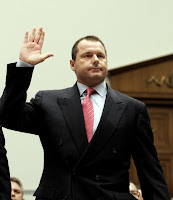
"Brian McNamee? Um, who?"
To almost no one's surprise, the 2022 Baseball Hall of Fame induction class was announced and Roger Clemens wasn't on the list. Along with Barry Bonds, Clemens has served as the poster-boy for the Steroid Era in baseball. Neither superstar had been able to crack the 75% barrier over the past 10 years, and with this last ballot, both fall short.

Much has been written over the years about Clemens, Bonds, steroids and the Hall. But this year, their last year of eligibility, has seen a slew of articles lamenting other writers' collective stance on accused steroid users. One even wrote that it would be a failure of the Hall of Fame if Bonds wasn't inducted.

But I'm not here to talk about Bonds. This is a Clemens story. Specifically, a story about how the voters got it right. That while Roger Clemens was one of the most dominant pitchers in baseball in the late '80s, by 1996 his skills had diminished.

In order to put everything into perspective, one first needs to understand just how dominant Clemens was in his prime. Here are some of the mind-blowing stats Clemens put up between 1986 and 1992:

  • Three Cy Young awards
  • 2.66 ERA
  • 1.09 WHIP
  • 136-63 record (.683 win %)
  • Averaged 257 IP and 239 K's
  • Led the AL in ERA four times
  • Led the AL in K's twice

But starting in 1993, the Rocket began to fade. To be clear: this wasn't a blip or an aberration. This was a steady and consistent decline from the level of excellence he'd established. From' 93 to '96, Clemens was no longer the best pitcher in baseball:

  • ERA jumped more than a full run to 3.77
  • WHIP rose to 1.29
  • Two losing seasons, and a record of 40-39
  • Averaged only 186 IP, over a 70-inning drop
By the end of the '96 season, fans were wondering if Clemens had pitched his last game in Boston. He had. But then a funny thing happened. Roger Clemens, age 31 and trending downward, got better. And not just a little better.

In his two seasons in Toronto, Clemens was even more dominant than he was in Boston. Back-to-back Cy Young awards. Leading the league in Wins, ERA and strikeouts. Almost 500 innings pitched in just two seasons. It was a remarkable turnaround. But eventually, we all understood how it had happened

Roger Clemens had pitched 13 seasons in the major leagues by 1996, and had won 192 games and three Cy Young awards. Assuming his continued decline, Clemens would have been lucky to hang around for 4 or 5 more seasons and rack up perhaps another 50 wins. It's entirely possible that his resume -- 240 wins, the Cy Youngs, that truly dominant 7-year stretch -- might have been enough to earn a ticket to Cooperstown. But we'll never know. 

Instead, Clemens employed a steroid and PED regimen that turned him into the Barry Bonds of pitching: an other-worldly presence who defied not only age, but explanation. Until the truth came out, and the Baseball Writers decided that cheaters don't belong in the Hall. In the end, Clemens only has himself to blame. 

Thursday, September 23, 2021

Simple Math

The 2021 baseball season is winding down, but the playoff races are heating up! As of this morning, the Yankees hold a 1/2-game lead on the Blue Jays for the second A.L. Wildcard. The Yanks are also 2 games behind the Red Sox, who would own the first Wildcard spot. The Yanks and Sox have 9 games left to play this season, while the Blue Jays have 10 on the schedule.

Who will win enough games to qualify for the post-season? Let's dig into the playoff math.

YANKEES

The Yankees play three games each against the Red Sox, Blue Jays and Rays, the first two series on the road. The first thing that jumps out at you are the records: all three opponents are playoff contenders, well above .500 on the season. The optimist says that the Yankees have their fate in their hands: beat the teams ahead of you and move up in the standings. The realist looks at the head-to-head results and doesn't like what they show:

  • 6-10 vs Boston
  • 6-10 vs Toronto
  • 7-9 vs Tampa Bay
Of the three teams fighting it out, New York has by far the toughest schedule.

BOSTON

Once they finish up with the Yankees at home, the Sox finish the season on the road... but against Baltimore and Washington. At 48-104, the Orioles have the worst record in baseball. Though the Nationals have played better of late, they aren't a very good team. They have also struggled mightily against .500 teams, going 29-56. It would be hard to see the Red Sox losing too many games past the Yankee series.

TORONTO

The Blue Jays will play 10 games, one more than the other two. Fortunately for them, they get the Twins four times, yet another cellar-dweller. The Jays will then face the Yankees and finish out the season at home against the aforementioned Orioles. Like Boston, the Jays don't face much competition beyond the Yankees for the rest of the way.

Like the saying goes, the games aren't played on paper. Anything can, and will, happen on the field. But you ignore the data at your peril. The Yankees are 19-29 against their remaining opponents. Boston and Toronto are a combined 45-22 against the teams they will face, including the Yankees. As had been said before, the baseball season is long enough to separate the contenders from the pretenders. The simple math says the Yankees will be watching the playoffs at home this October.

Saturday, September 11, 2021

Will the Real Slim Shady Please Stand Up?

Compared to all other sports, the baseball season is long. So long, in fact, that over 162 games, the season takes into account all the highs and lows, the streaks, and the slumps. The Yankees won 13 games in a row not long ago, then somehow pivoted into a 2-11 free-fall. Those 26 games taken as a whole work out to 15-11. A record of 15-11 doesn't sound all that special. But over an entire season, if a team won 15 of every 26 games they played, they'd finish with 93 wins. Cream rises, while the flukes usually sink.

The 2021 Yankees aren't a 93-win team. Of course, they're not really a 2-11 terrible team, either. The truth of the Yankees lies somewhere in between. Their record is akin to how they play: all-or-nothing, swing-and-miss but sometimes connect. Pitch well for a while, but maybe blow the lead, the save, or the game. I like to say they are “consistently inconsistent”.

In the end, they are the hallmark of the Brian Cashman era:

  • Play well enough to appear competitive
  • Win just enough to keep the stadium coffers full
  • Do just enough to make it look like you know what you're doing
  • Fail against better competition in the playoffs
  • Repeat for 20 years

It remains to be seen what the Yankees will do over the final 21 games of the season. As of this morning, they would qualify for the 2nd Wildcard and a date with Boston at Fenway Park. But with another loss to the Mets and a Blue Jays win today, the Yanks would be out of a playoff spot.

Either scenario seems equally plausible. Less plausible is the idea that these Yankees will make a deep October push. The Sox, Jays and ultimately the Rays could be standing in their way. If that happens, if the Yankees make another early post-season exit, or fail to make it at all, will that be the final straw? Will Hal Steinbrenner channel his father in the name of winning? Will the Real Slim Shady please stand up?

Friday, July 30, 2021

Trader Brian

"Hello? Might I interest you
in some AA prospects?"
Questions surrounding the fate of the 2021 Yankees were answered resoundingly by General Manager Brian Cashman this week. A flurry of splashy trades ahead of the MLB Trade Deadline landed the Yankees on the back page. Going all-in on Joey Gallo and Anthony Rizzo signaled to the baseball world that these Yanks will be fighting to the finish.

If through all these moves, Cashman manages to assemble a playoff team, then kudos to him. At 53-48, sitting 3.5 games out of a Wildcard spot, no one thinks the Yankees are an October lock. Remaking a roster on the fly in mid-season would be quite an achievement.

On top of that, it doesn't appear that the Yankees overpaid to improve the team. Sure, it's possible that among the haul of players traded away is born another Buhner / Smoltz punchline. Even so, the current Yankees' team will be long disbanded before any one of those minor leaguers makes an impact at the major league level.

HOWEVER... before we start polishing up the Executive of the Year trophy, let's take a step back. Lost in all the excitement of Trader Brian's wheelin' and dealin' is this: Cashman is actively turning over the very same underachieving roster that HE created. The Yankees needed Gallo and Rizzo because the current lineup is unbalanced and sorely lacking left-handed power. If Clay Holmes is the answer in the bullpen, it's because Luis Cessa, Justin Wilson and the parade of arms already out there were not. Today's acquisition of Andrew Heaney speaks quite loudly, too: a pitcher with an ERA north of 5 isn't stepping into a rotation filled with aces. 

On paper, these trades seem great and will surely boost morale both on the field and in the seats. All indications are that the Yankees came away with major league fortifications while parting with only potential pieces of the future. Yet if all these flashy trades amount to an empty October without the playoffs, then someone needs to hold Cashman accountable for that. How much credit do you get for attempting to fix problems of your own making? These next two months should be Cashman's final exam. A failing grade should lead to his overdue exit.

Monday, July 26, 2021

Bull Market, Bear Market

Years ago, a fairly incompetent employee worked in the front office of the New York Yankees. George Costanza, repeatedly failing upward, somehow survived in the organization despite of his lack of accomplishments or any track record of success. (Sounds unfortunately familiar.) 

In addition to not knowing how to run a baseball franchise, George had little knowledge about the stock market. When asked about playing the market, in the midst of a lie, George noted that he's in all the markets: "Bull market, bear market, you name the market, I'm there."

In a roundabout way, that brings us to the 2021 edition of the New York Yankees and the impending MLB Trade Deadline. Throughout this up-and-down season, many have speculated whether the Yankees will be buyers or sellers by the end of July. Put another way, should Brian Cashman be bullish or bearish on this year's squad? 

From a purely mathematical standpoint -- and we all know how Cashman loves his analytics -- the Yankees are still alive for a spot in the playoffs. Though a division pennant is all but a pipe dream following this weekend's disastrous visit to Fenway Park, the Yanks sit only 3.5 games out of the 2nd Wildcard. While having to fight for the last Wildcard is falling wildly short of most pre-season predictions, the post-season is still within reach. Neither team currently in front -- Oakland nor Seattle -- is a complete team that one couldn't see fade as the season wears on. So what's a General Manager to do? 

Over the years, rightfully or wrongfully, Cashman has been reluctant to hit the "reset" button on the roster, whether in the off-season or at the deadline. The belief that New Yorkers won't settle for a non-contender may be true in the short term. Empty seats in September, not to mention an October without baseball, is a loss of revenue for the team. (Teams like Boston, however, have shown over the past two decades that stripping down a team and building it back stronger might be the best formula for long-term success.)

Unfortunately, there are too many holes on the current Yankees team to target any one area of need. Certainly the outfield has been thinned through injury and ineffectiveness. The bullpen, beleaguered of late, could use reinforcements. Even with Gerrit Cole and a rejuvenated Domingo German, there is still a need for a #3 or #4 starter in a post-season rotation. Any of the above could needs can be addressed without sacrificing top prospects or major league stars. A short-term rental typically costs less to acquire and can provide a boost, but will be off the books for next season.

With history as our guide, it seems unlikely that Cashman, or team ownership, will be willing to punt on 2021 while a playoff spot is still in reach. However, reinforcements for a Wildcard run should look decidedly different than a team poised to win it all now. (See San Diego's acquisition of Adam Frazier as an example of a team pushing all their chips into the center of the table.) 

We'll have our answers about the future of the '21 Yankees by the end of the month. (Perhaps we'll know even earlier if three games in Tampa play out like the trip to Boston.) What happens to the Yankees beyond that, and who will be making those decisions, could become more clear by the fall.

Monday, July 12, 2021

The Shot Heard 'Round the Bronx

It's been one day since the Yankees imploded against the Houston Astros, but the wounds are still fresh. By blowing a 5-run lead in the 9th inning, the Yanks suffered their worst loss of the season, if not in recent memory. That it came at the hands of the arch-rival Astros, and off the bat of their nemesis Jose Altuve, made it feel that much worse. But this game will have greater implications on the 2021 season than a single loss.

For one, the loss takes away the shine of winning the first two games of the series in impressive fashion. The Yanks shut out Houston's league-leading offense in back-to-back games, the first time that had happened in over 3 years. They also built a sizeable lead in Sunday's game before it all came crashing down. 

While it's easy to argue that the loss was an anomaly, and that a well-rested Chad Green shuts the door nearly every time, it is also easy to argue that a team on pace to win only 84 games is bound to suffer losses like this. The fact that Green was in the game at all speaks to the fact that manager Aaron Boone and the Yankees have lost a great deal of faith in their highly-paid closer, Aroldis Chapman.

That game also marked the symbolic end of the season's first half. New York slumps into the All-Star break with a 46-43 record, mired in 4th place in the A.L. East. Paradoxically, the Yankees' strong showing against Houston and Seattle belies their overall strength. Taking 4 of 6 games on this past road trip looks good on paper, and dampens the blow from Sunday's collapse.

What's worse, though, is that New York's recent success means it's harder to argue they should be sellers at the trade deadline. That could change, though, as after the break the Yankees will face Boston and Tampa Bay 11 times before the month is out. We will probably know all we need to know about the 2021 Yankees as the July 30th deadline approaches. Sunday's debacle just might be the game everyone talks about if the Yankees don't make a dramatic turnaround in the season's second half.

Tuesday, June 15, 2021

If It Walks Like a .500 Team...

Frustration in the Bronx
It's June 15th, and the Yankees sit in 4th place in the American League East with a record of 33-32. They are not playing well, having lost 13 of their last 18 games, including a brief, 2-game sweep at the hands of the Phillies. Despite all that, the Yankees haven't given up. At least not in the press:
"I don't think there's any getting used to freakin' losing." -- Aaron Boone

 "Really, the one thing we can do is focus on our work and our preparation, understanding we do have a lot of games ahead of us." -- Domingo German

"We’ve got quite a bit of season left. We do have a little bit of time left to figure that out." -- Brett Gardner 

The Yankees are saying the right things, but is there really "quite a bit of season left" to play? New York has played 65 games in 2021. That represents about 40% of the entire season. How late is too late to turn it around? To quote an old coach from another sport:

“You are what your record says you are.” -- Bill Parcells

And right now, the record says that the Yankees are a .500 team. If the season ended today, not only would the Yankees finish 9 games out in the East behind the Rays, but 4 games out of even the second Wildcard. Is this simply what the 2021 Yankees have to offer? 

In April, it was easy to write off the Yankees' slow start. Only 22 games into the season, there was still plenty of time to right the ship, for the silent bats to awaken. But here we are in June, and the same issues still plague the team: 27th in runs scored, 27th batting with RISP, grounding into the most rally-killing double-plays.

Ever reliant on the home run, even that has failed the team. Though the "Bronx Bombers" are tied for 13th in baseball in homers -- a marked improvement since April -- they are rarely game-changers. Of the 80 home runs the Yanks have hit, 54 of them were solo shots, the 4th-most with the bases empty. Somewhere, Earl Weaver is shaking his head.

Beyond the rah-rah, beyond the speeches and the promises to get grindin', lies a reality that the Yankees need to face: this team, as presently constituted, is not good enough. An over-abundance of strikeout prone, right-handed hitters has doomed the lineup. Injuries and inconsistencies have led to a decline on the mound. The Yankees were 5th in ERA in April, 6th in May. Thus far in June, the Yankees team ERA is 5.38, 22nd in baseball. 

The Yankees also fall on the wrong side of history. Since 1996, the first season with the Wild Card, 85 of the 144 teams that eventually won their division held at least a share of that division lead entering June 1st, nearly 60% of the time. Simply put, good teams that sit atop the division by mid-season tend to stay there. Conversely, there are probably many reasons why a 33-32 team doesn't suddenly climb the standings. Not that it can't happen, but logic tells us otherwise.

If the Yankees continue to slide and miss the playoffs in 2021, what happens next? Will Hal Steinbrenner finally be motivated to make a change in the front office? Will 12 years without a title be a long enough drought for a franchise that spends like a champion? It remains to be seen what happens the rest of the way, and perhaps over a long, cold off-season in the Bronx.

Tuesday, April 27, 2021

Don't Throw the Boone Out with the Bathwater

Much is being said about the terrible state of the Yankees in 2021, and rightfully so. After a loss to a middling Orioles team last night, the Yankees suffered the indignity of falling into last place in the A.L. East with a record of 9-13. The calendar says that it’s almost May, which by definition would be past the point of dismissing a slow start by saying "It’s only April." As Yogi Berra once said, "It gets late early out there."

While it's perfectly fine to get on the Yankees, I'm also hearing a lot of chatter about their manager, Aaron Boone. Yes, the same Aaron Boone who won 203 games in his first two seasons as the New York manager and has guided the Yankees to the postseason all three years he's been at the helm. Unfortunately for Boone, when a team is slumping as the Yanks are now, the manager is an easy target. But is he the right one?

Of the four major sports, a baseball manager probably has the least effect on a game's outcome. Cumulatively over a 162-game season, even a bad manager will only cost his team a few games versus a "true tactician" pulling the levers. Even the most maligned manager's decisions, typically involving a pitching change (or lack thereof), ultimately come down to whether the player executes or not. Second guessing may be a part of sports, but no manager ever puts a player into a situation where he doesn’t expect that player to succeed.

Bottom line: the players with the NY on their caps and bats in their hands are not getting the job done this season. The Yankees are ranked dead-last in MLB in batting average, a woeful .203 as a team. They are 27th in runs scored, and sport an anemic .650 OPS. Only the Detroit Tigers, who not coincidentally own the worst record in baseball, have had less success at the plate. By contrast, the surprising Red Sox lead the majors in OPS: the team's whopping .795 mark has certainly contributed to their 5th-best record in baseball and first place standing in the East. 

Another popular angle to attack Boone is his seemingly rigid reliance on analytics. Every move he makes, from his lineup to the pitching matchups or to defensive shifts, can be tied back to a mathematical model. Worse, from the average fan's standpoint, is the contention that Boone can't make a decision without checking upstairs first. 

Whether or not Boone is Brian Cashman's puppet is a different debate, but we can all agree that OF COURSE Boone shares Cashman's analytical outlook. That's why he was hired, and why Joe Girardi is managing in Philadelphia. Anyone who thinks that Boone's hypothetical replacement would not follow in lockstep with the Yankee GM is being foolish. (If you'd like to argue that Cashman shouldn't be the GM, well, I've got a lot of columns that support that premise.)

I'm not saying that Boone is the reincarnation of Casey Stengel, or that he doesn't sometimes leave us scratching our heads. It's just that as managers go, Aaron Boone is not the reason the Yankees are 9-13. The players in that lineup are not hitting. Reclamation pitching projects might pitch well for a few innings, but ultimately the bullpen will bear the brunt. To put it another way, don't blame the chef for your meal if the guy buying the groceries keeps shopping on the "Clearance" shelves.

Thursday, October 1, 2020

Time Will Be Telling

In November of 2018 (which seems more like 20 years ago than just two), the Yankees acquired James Paxton from the Mariners in exchange for their top pitching prospect at the time, Justus Sheffield. On the face of it, the trade seemed like a good deal, if only because Paxton was a major-league starter, ready to contribute to a championship contender. Meanwhile, Sheffield was only a prospect, that glorious time when a player's value can only be calculated by an organization's imagination. 

At the time, I wrote that the trade could play out in one of three ways.  Last season, Paxton started slowly but finished strong, but the Yankees didn't win. Meanwhile, Sheffield didn't look good at all in 2019.  Scenario #2, a wash for both teams, played out in Year One.

Year Two, which also happens to be Paxton's last season under contract, is nearly in the books. Paxton took a step back, battling health issues and making only 5 mostly unimpressive starts. It remains to be seen if the Yankees will win a title this year. Less likely will be Paxton making a significant contribution to that title run.

Meanwhile, something funny happened in Seattle. The Mariners made an unexpected push towards the playoffs. Leading that charge was a dominant Justus Sheffield. In September, Sheffield won his last 4 starts, averaging over 6 innings per start without giving up more than 2 runs. While only a small sample in a short season, those are looking like "ace" numbers.

Although no one could fault Cashman at the time for making a move -- it's what General Managers are paid to do -- hindsight is always 20/20. As with any trade, its success or failure may not be known for years. (Ask the guys who traded away John Smoltz or Jay Buhner.) 

If the Yanks let Paxton walk after two seasons without a championship, his acquisition would be no more than a footnote had Sheffield continued to pitch as he had in 2019. But if Sheffield builds upon his 2020 breakout and continues his upward trajectory, this deal may not so easily fly under the radar anymore.

Thursday, June 25, 2020

A Sprinter's Chance

PLAY BALL!

Or if the latest headlines are to believed, Major League Baseball will be back on either July 23 or 24. Since we are living in unprecedented times, the upcoming season will be unprecedented, too: a 60-game season, regionally isolated, leading up to a full slate of playoff series.

Conventional wisdom says that in a short series, the better team may not always win. A strange bounce, a hot starter, or an ill-timed slump and the underdog emerges. Could the same hold true for a short season? 

MLB teams are built for a war that stretches for 162 games. Over the course of a long season, the best teams rise to the top. It's hard to be a 90-win fluke. But throughout the season, even a mediocre team can get hot for a stretch. At the same time, even good teams run into a roster-wide slump now and then. Over time, these small bursts of hot play and cold spells tend to even out.

So what happens in a 60-game season when a mediocre team plays well, say for a 12-game stretch? That's 20% of the entire season! Put another way, those same 12 games in 2020 would represent the equivalent of a 32-game span in a normal 162-game season. A team that goes 8-4 over two weeks would have to go 21-11 to have the same impact. 

It will be interesting to watch if another team can make a Nationals-like run, this time over the regular season. Get hot at the right time and make a push for the playoffs and beyond.


Thursday, January 16, 2020

Cheaters Never Prosper?

The fallout from the Astros' cheating scandal continues to reverberate around baseball. Immediately following MLB's decision to suspend Houston's GM Jeff Luhnow and manager A.J. Hinch for one year, the Astros decided they didn't need to wait that long: both men were quickly fired by owner Jim Crane.

At the same time, penalties were not yet handed out to current Red Sox manager Alex Cora, himself a former member of the Astros' coaching staff and a key player in the cheating scandals for both teams. Perhaps taking another page from the Houston playbook, Boston and Cora decided to "part ways" even before the results of the investigation were produced.

So Luhnow, Hinch and Cora are all out of work, with their reputations so tarnished they'll likely never work in baseball again. But the question still needs to be asked: was it worth it?

We can talk about "tainted wins" or "fair play" all day. But here are the facts: the Astros all got World Series rings. The Red Sox got their parade. Everyone on those teams received the accolades, endorsements and pay raises that come with a world championship. Major League Baseball isn't about to vacate a title as the NCAA might have done.

Even better, those teams don't have to worry about their legacies moving forward. Barry Bonds has a lot of records that even asterisks can't take away, but the cloud of PEDs still hangs over him and his chances for the Hall of Fame. No amount of scrutiny can take away those rings now.

Teams will always attempt to get a competitive advantage. They've done it since the beginning of baseball and they won't stop now. Might these penalties make teams think twice before they step over the line? Perhaps. But it's clear that unless you get caught, the rewards outweigh the risks.

Wednesday, July 31, 2019

Striking Out

The Major League Baseball trade deadline has come and gone.  And with it, so, too, has the chance for the Yankees to fix the gaping holes in their starting rotation.  We've heard the excuses: the price was too high, our prospects are untouchable, we just got outbid.  That's all well and good, but a team that wants to get better -- NEEDS to get better -- either gets better or it doesn't.  The Yankees did not get better today.  Brian Cashman swung and missed.

To be fair, the Yankees are on a pace to win 104 games this season.  They have an 8-game lead in the AL East.  Outside of a remarkable collapse, this team is going to the playoffs.  But as we've seen year after year, playoff baseball is different.  Good pitching beats good hitting.  A team built around hitting 3 home runs a game, for whatever reason, doesn't hit them in October.  The Yankees needed a top-flight starter and didn't get him.

We're not inside Cashman's office. We don't know what other teams were asking in return for their pitchers.  But we do know what it looks like when a team goes all in:

  • The Cubs parted with Gleyber Torres, who blossomed into an All-Star, in return for Aroldis Chapman.  Chapman closed it out as the Cubs won the World Series
  • The Astros took a chance on Justin Verlander.  All he did was pitch Houston to a World Series title
  •  And today, the Astros pushed their chips to the center of the table and came away with Zach Greinke.  They are now the favorites to win again
It's easy today to chastise Cashman for not making a move.  But the season isn't over.  The Yankees might somehow win the World Series and Cashman will look like a genius for hanging on to his prize prospects.

But there remains a very real possibility that the Yankees' flawed rotation pitches like they have over the past few weeks and the Yankees make an early exit.  Clint Frazier or Deivi Garcia are not going to help them in 2019.  Who knows what 2020 or beyond will hold?  Just ask the Nationals about the perils of misjudging a championship window.

Fortunately, it will be very easy to judge how Brian Cashman handled the trade deadline come October.  The Yankees should either be holding a World Series trophy, or interviews for their next GM.


Tuesday, March 5, 2019

Pays of Future Past

Apologies for the headline pun, and kudos to the inspiration, but when talking about the latest astronomical baseball contracts, one must look simultaneously at the past while predicting the future.

Do I know for sure that the Padres absolutely overpaid for Manny Machado? Or that the Phillies will certainly regret the size and scope of the contract they gave to Bryce Harper? No, of course not.

But I do know that historically speaking, most of the baseball contracts of the 10-year, 9-figure variety that teams have handed out were mistakes for the teams that proffered them. As reference, here is a list of the five players in in baseball history who had signed a deal worth $240 million or more prior to this off-season:


Notice a trend? Stanton, traded. A-Rod: first deal, traded, second deal, released. Cano, just traded. Doesn't seem like a ringing endorsement on behalf of management.

What about the other two still with the teams that signed them? One could argue that after a slow start, Pujols has been a good player for the Angels. But maybe Anaheim thought they were paying $24 million annually for the All-Star with 11 top-five MVP finishes, including three trophies, instead of the solid contributor who managed to crack the top 20 only twice since. Less could be said for Cabrera, who has struggled with injuries and age since signing that bank-breaking extension in 2014.

Yet a mega-deal's impact can extend beyond just on-field performance. For that, we can look to Zack Greinke.  

Even with the enormous payouts to Harper and Machado, Greinke still owns the title as highest-paid player: his six-year, $206.5 million contract with the Diamondbacks works out to $34.4 million per year. Relatively speaking, he's been worth it: Greinke has a 45-25 record and a 3.53 E.R.A for Arizona over three seasons. But that doesn't tell the real story.

Arizona's gamble on Greinke -- an ace leading an ascendant team into post-season glory -- hasn't panned out. Essentially admitting defeat this off-season, the D-backs shipped All-Star Paul Goldschmidt to St. Louis and lost A.J. Pollock and Patrick Corbin to free agency. That has left the team's payroll "comically top-heavy":

Greinke will make nearly five times the salary of any of his teammates; the next highest-paid Diamondback is outfielder David Peralta, at $7 million. Hall said the Greinke contract had made it harder to afford other premium talent, but the team was still happy to have him.

And there it is: despite the fact that Greinke has essentially lived up to the outsized expectations of his contract, the Diamondbacks haven't won. And now they can no longer afford to try.

If the Phillies win the World Series before they inevitably have to trade Harper, then the deal is a winner. You can't put a price on a championship. The same applies for San Diego, though maybe even making a playoff appearance or two and being relevant would be enough return for the Padres before Machado gets shipped out. But the more likely scenarios, those that have played out with near regularity, don't come with a storybook ending.

Wednesday, December 12, 2018

Catch as Catch Can

Once you get past the names Machado and Harper, it seems like the player getting the most ink this Hot Stove season is J.T. Realmuto, who, as of today, is still the catcher for the Marlins.  An All-Star last season, Realmuto is thought by many to be the one of the best catchers in baseball.  For argument's sake, let's say he's the best.  It still doesn't make sense to me why he is more sought out than the Sankara stones.

Why?  Realmuto is a catcher.  Catchers, by dint of the position they play, are everyday* players with an asterisk.  Even the heartiest among them can't play in every game.  (Willson Contreras led the majors last season with only 123 starts behind the plate.). Compare that to Manny Machado, though much-maligned for his supposed lack of hustle, he still managed to play in 162 games for two different teams last season.  That enabled Machado to tally 632 at-bats, compared to only 477 AB's that Realmuto collected in 125 games (112 at catcher) last year.

The way teams are talking about Realmuto -- especially the Mets -- make you think he is a game-changer along the same lines as superstars that can play every day (injuries aside).  But a player who is only going to appear in 6 out of every 7 games just can't have the same impact.  That's why the notion of offering up Noah Syndergaard -- one of baseball's best starting pitchers -- makes me scratch my head.

No one is saying that Realmuto isn't a good player, or that adding him to the roster won't make a team better.  However, based on the position he plays, the return on investment needs to be taken into account before any trades are consummated.

Wednesday, April 18, 2018

Aaron Boone's First Test

With an embarrassment of riches at his disposal, Aaron Boone was handed the reins for the 2018 New York Yankees.  As a first year manager, most expected Boone to go through some growing pains during his on-the-job training.  That's what Spring Training is for, after all.

Yet not three weeks into the young season, Boone's Yankees find themselves where they didn't think they'd be: at .500, 8-8, looking up in the standings at both the Red Sox (not surprisingly) and Blue Jays (unexpectedly).  George Steinbrenner is long gone, so there won't be any bombastic declarations emanating from the Bronx.  Boone's job is safe.  But that's not to say there isn't danger lurking.

Contributing to the Yanks' subpar start are the struggles of Giancarlo Stanton.  Adding the reigning NL MVP to the their already formidable lineup made the Yankees a popular choice for the World Series.  But Stanton has underperformed even the rest of his teammates.  He has been uncharacteristically bad in his first 16 games in the Bronx, batting just .197 while striking out 29 times, the most in the AL.

After last night's loss to the lowly Marlins, Boone was asked about Stanton.  The new manager expressed confidence in his scuffling slugger:

"He’ll get rolling here and eventually the league will pay for some of his early struggles."

But then Boone continued, saying that he'd consider dropping Stanton down in the lineup:

"I might flirt with splitting different guys up and stuff, but not moving him down too far.  Because he’s one at-bat away from getting locked back in, and then the last thing you want is him hitting down in the order and getting pitched around."

I'd argue that the last thing you want is to tell your $235 million MVP that you don't trust him to hit in the 3-hole right now.  This isn't some nervous rookie, a slumping Aaron Judge circa 2016, that you can move down to ease up the pressure.  By virtue of his résumé, and his contract, Stanton has no place to hide.  Batting him 5th or 6th won't likely change anything, except maybe make him press harder.  Imagine getting dropped in the lineup and still not hitting.  Yankee Stadium fans will be booing him before he steps into the box.

Playing with the lineup, shaking up the bullpen -- these are all rookie manager moves.  Veteran managers understand that the baseball season is long, and most times, these things work themselves out.  A former player like Boone should know that.  And he probably does, which makes the possibility of him dropping Stanton in the lineup all the more puzzling.

One last thing before I go.  Not that the stakes are as high, but the last time a manager decided to move a struggling slugger down in the lineup, it didn't work out well.  It's safe to say that the relationship between Joe Torre and Alex Rodriguez never recovered from that October move.  Making matters worse, it certainly didn't help that night.  Something Boone might want to keep in mind.